
DevProvider

The new features of hyperledger fabric v2.0

Decentralized governance for smart contractsΒ 

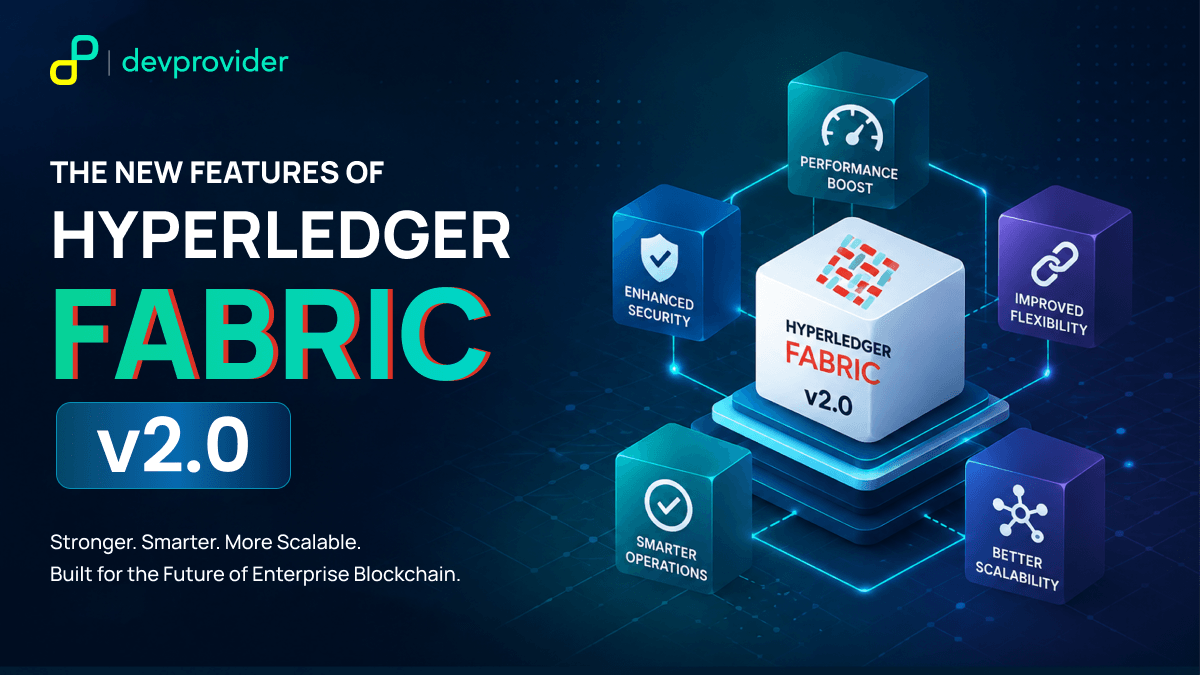
Hyperledger Fabric has unveiled its most significant update yet, moving from v1.4 to Fabric v2.0. This major release brings powerful new features and enhancements designed for developers, enterprises, and network operators alike. Key improvements include support for advanced application and privacy patterns, stronger governance controls over smart contracts, and expanded options for operating nodes efficiently.

One of the standout features of Fabric v2.0 is the ability to upgrade network components on your own terms. Organizations can perform rolling upgrades from v1.4.x, ensuring minimal disruption, and enable new capabilities only when all member organizations are readyβ€”offering unprecedented flexibility and control over your blockchain network.

At DevProvider, we stay ahead of blockchain advancements like these to help you leverage cutting-edge solutions for secure, scalable, and adaptable enterprise applications.

Hyperledger Fabric v2.0 introduces a decentralized governance model for smart contracts, redefining how organizations deploy, manage, and upgrade chaincode on their blockchain networks. This update brings new flexibility, security, and operational efficiency for enterprises and developers.

Decentralized Chaincode Lifecycle

Fabric v2.0 replaces the previous centralized model with a chaincode lifecycle that requires multiple organizations to agree on chaincode parameters, such as endorsement policies, before it can interact with the ledger. Key improvements include:

  • Collaborative agreement: Unlike Fabric v1.x, where a single organization could define chaincode parameters, the new lifecycle supports both centralized and decentralized trust models. Organizations must approve chaincode parameters collectively.

  • Controlled upgrades: Chaincode can now only be upgraded after approval from a sufficient number of organizations, reducing the risk of uncoordinated upgrades.

  • Flexible policies: Endorsement policies and private data collection configurations can be updated without repackaging or reinstalling the chaincode. A default policy automatically adjusts when organizations join or leave the channel.

  • Readable packages: Chaincode is packaged as easily inspectable tar files for transparent installation across organizations.

  • Multiple deployments from one package: A single chaincode package can now be deployed multiple times with different names on the same or different channels.

  • Custom extensions: Organizations can extend chaincode for their own purposes, enabling minor updates independently without requiring network-wide coordination.

The new lifecycle becomes effective only when a channel application capability is updated to v2.0, while existing deployments can continue using the previous lifecycle.

New Chaincode Application Patterns

The decentralized agreement model also extends to application-level chaincode patterns, enabling organizations to:

  • Automated checks: Add pre-endorsement validations to chaincode functions.

  • Decentralized approvals: Model human decisions across multiple transactions, allowing conditional consent from multiple organizations before committing ledger updates.

  • Enhanced private data handling: Share and verify private data across collections, implement collection-level endorsement policies, and use implicit per-organization collections without upfront definitions.

External Chaincode Launcher

Fabric v2.0 introduces the external chaincode launcher, offering operators flexibility in building and running chaincode:

  • No Docker dependency: Chaincode execution no longer requires a Docker daemon.

  • Alternative environments: Chaincode can run in any operator-chosen environment, including Kubernetes pods.

  • Custom builders: Operators can provide external executables to define how chaincode is built and launched.

Performance and Security Enhancements

  • State database cache: New caching for CouchDB peers improves read performance during endorsement and validation.

  • Alpine-based Docker images: Lightweight, secure Linux-based images reduce download times, disk usage, and potential vulnerabilities.

Sample Test Network

The updated fabric-samples repository includes a modular, user-friendly test network for rapid experimentation. The network now supports deployment using Certificate Authorities in addition to cryptogen.


At DevProvider, we leverage Hyperledger Fabric v2.0 to help organizations build secure, flexible, and scalable blockchain networks. Whether it’s smart contract governance, private data management, or high-performance ledger operations, we guide you to implement the latest advancements with confidence.